Landsknecht
May 10, 2026, Photo archive
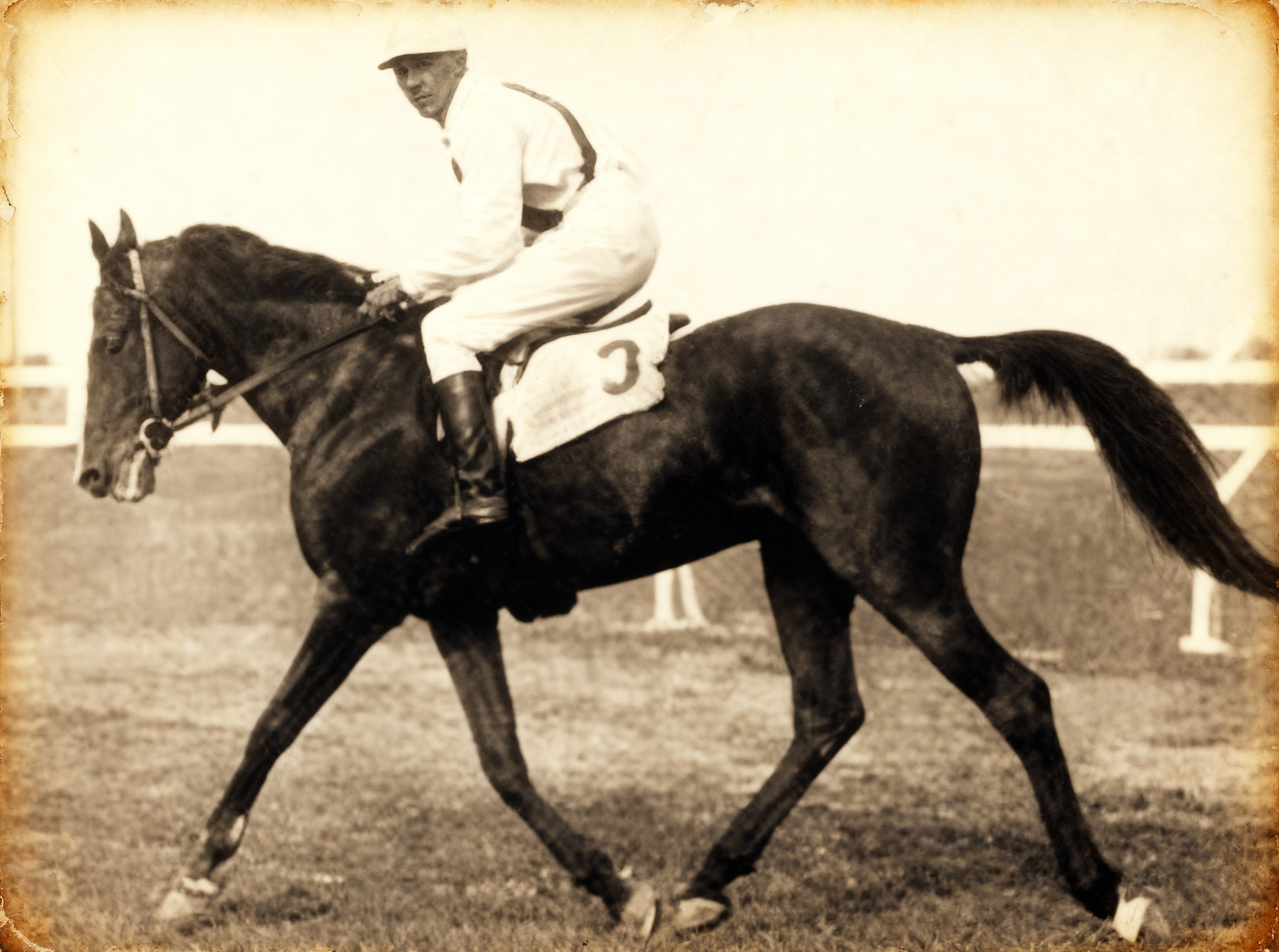
Landsknecht
Landsknecht was a bay stallion foaled in 1927 at Weil, Germany. The name "Landsknecht" derives from the German term for a mercenary foot soldier.
His sire Koheilan IV (foaled 1904) was bred and owned by the Bábolna Stud from 1904 to 1925. Through his sire Koheilan II, he traced through sire line to the desert-bred Koheilan Adjuze who was imported to Bábolna in 1885. Koheilan IV's dam, 124 O’Bajan, traced to the Saklawiyah mare 52 Obajan Siglavi, imported to Bábolna in 1852. At Bábolna Koheilan IV produced his most notable son: the grey Koheilan VIII (x 10 Gazal) or also known as Koheilan I in Poland later. At Radautz, Koheilan IV was also the sire of the mare Koalicja, whose beauty was praised by contemporary witnesses. She was a good broodmare in Poland between the two World Wars.
Koheilan IV was transferred from Bábolna to Weil Stud, as an aged stallion, in exchange for the stallion Said (by Dynamit out of Sardine), in order to reduce inbreeding within the respective programs.
At the time of his arrival in Weil, Koheilan IV was already in his twenties. Despite this, his conformation was recorded as correct: strong bone, well-developed joints, and particularly good hocks. He measured approximately 157 cm. He showed a refined head, a well-sloped shoulder, and a high tail carriage.
His use at Weil was limited due to age. He left only a few registered offspring at the stud among them the mares Caesarea (out of Carmen) and Seerösle (out of Sardine) and Landsknecht.
Landsknecht's dam Soldateska (Souakim x Sylphide I) was bred at Weil Stud and belonged to the Murana I dam line maintained within that program. She was a full sister to the bay stallion Sven Hedin (Kemir), foaled in 1905.
Besides Landsknecht, she produced the mare Jatta by Jasir. While Landsknecht was exported early and had no breeding influence in Weil/Marbach, Jatta became an important broodmare. Her descendants were retained and further developed at the Marbach State Stud. Her daughters were influential at the State Stud. For example Sahmet (also by Hadban Enzahi) produced the Marbach chief sire Saher (by Ghazal). Some of Sahmet's offspring were exported abroad: Her sons Sindbad to Australia, Shokry to Brazil and KEM Safir to the United States/Canada (all by Hadban Enzahi). Jatta's granddaughter Sanacht (Hadban Enzahi x Hathor) became foundation mare at Plum Grove Farm and established a family there.
As a yearling, Landsknecht was exported to Poland where he was trained and raced successfully before entering breeding.
Although his direct contribution as a sire remained limited in number, one of his daughters, Azja IV, established his long-term significance. She was foaled in Poland and later exported to the United States by Henry Babson, who imported several Polish Arabians during that period.
In the United States, Azja IV was used as a broodmare and produced six foals (four colts and two fillies). Most of her offspring were incorporated into breeding programs, and her influence continued through multiple lines.
Her most important offspring was the stallion Azraff, sired by Raffles. Azraff later became one of the more influential post-war sires in American Arabian breeding. He was used extensively and contributed to both halter and performance lines.
Through Azraff, Azja IV became a significant link between earlier European breeding and modern American Arabian pedigrees. His descendants include multiple national-level champions and influential breeding animals. Among these are Galizon (U.S. National Champion Stallion, 1969), Gai Parada (U.S. National Champion Stallion, 1977), Dreamazon (Scottsdale Junior Male Champion, 1978) and Aalusive Bey (U.S. National Champion Mare, 1994).
Azraff also appears in the pedigree of World Champion Stallion Marwan Al Shaqab.
Landsknecht did not distinguish himself as a sire through the number of offspring he left. With only a small group of registered progeny in Poland, and no direct breeding contribution at Weil Stud, his immediate impact remained limited in Europe.
His lineage, however, did not disappear. Through his daughter Azja IV, and particularly through her son Azraff, his blood continued into modern Arabian pedigrees and later international show and breeding lines.
His sire Koheilan IV (foaled 1904) was bred and owned by the Bábolna Stud from 1904 to 1925. Through his sire Koheilan II, he traced through sire line to the desert-bred Koheilan Adjuze who was imported to Bábolna in 1885. Koheilan IV's dam, 124 O’Bajan, traced to the Saklawiyah mare 52 Obajan Siglavi, imported to Bábolna in 1852. At Bábolna Koheilan IV produced his most notable son: the grey Koheilan VIII (x 10 Gazal) or also known as Koheilan I in Poland later. At Radautz, Koheilan IV was also the sire of the mare Koalicja, whose beauty was praised by contemporary witnesses. She was a good broodmare in Poland between the two World Wars.
Koheilan IV was transferred from Bábolna to Weil Stud, as an aged stallion, in exchange for the stallion Said (by Dynamit out of Sardine), in order to reduce inbreeding within the respective programs.
At the time of his arrival in Weil, Koheilan IV was already in his twenties. Despite this, his conformation was recorded as correct: strong bone, well-developed joints, and particularly good hocks. He measured approximately 157 cm. He showed a refined head, a well-sloped shoulder, and a high tail carriage.
His use at Weil was limited due to age. He left only a few registered offspring at the stud among them the mares Caesarea (out of Carmen) and Seerösle (out of Sardine) and Landsknecht.
Landsknecht's dam Soldateska (Souakim x Sylphide I) was bred at Weil Stud and belonged to the Murana I dam line maintained within that program. She was a full sister to the bay stallion Sven Hedin (Kemir), foaled in 1905.
Besides Landsknecht, she produced the mare Jatta by Jasir. While Landsknecht was exported early and had no breeding influence in Weil/Marbach, Jatta became an important broodmare. Her descendants were retained and further developed at the Marbach State Stud. Her daughters were influential at the State Stud. For example Sahmet (also by Hadban Enzahi) produced the Marbach chief sire Saher (by Ghazal). Some of Sahmet's offspring were exported abroad: Her sons Sindbad to Australia, Shokry to Brazil and KEM Safir to the United States/Canada (all by Hadban Enzahi). Jatta's granddaughter Sanacht (Hadban Enzahi x Hathor) became foundation mare at Plum Grove Farm and established a family there.
As a yearling, Landsknecht was exported to Poland where he was trained and raced successfully before entering breeding.
Although his direct contribution as a sire remained limited in number, one of his daughters, Azja IV, established his long-term significance. She was foaled in Poland and later exported to the United States by Henry Babson, who imported several Polish Arabians during that period.
In the United States, Azja IV was used as a broodmare and produced six foals (four colts and two fillies). Most of her offspring were incorporated into breeding programs, and her influence continued through multiple lines.
Her most important offspring was the stallion Azraff, sired by Raffles. Azraff later became one of the more influential post-war sires in American Arabian breeding. He was used extensively and contributed to both halter and performance lines.
Through Azraff, Azja IV became a significant link between earlier European breeding and modern American Arabian pedigrees. His descendants include multiple national-level champions and influential breeding animals. Among these are Galizon (U.S. National Champion Stallion, 1969), Gai Parada (U.S. National Champion Stallion, 1977), Dreamazon (Scottsdale Junior Male Champion, 1978) and Aalusive Bey (U.S. National Champion Mare, 1994).
Azraff also appears in the pedigree of World Champion Stallion Marwan Al Shaqab.
Landsknecht did not distinguish himself as a sire through the number of offspring he left. With only a small group of registered progeny in Poland, and no direct breeding contribution at Weil Stud, his immediate impact remained limited in Europe.
His lineage, however, did not disappear. Through his daughter Azja IV, and particularly through her son Azraff, his blood continued into modern Arabian pedigrees and later international show and breeding lines.