Burning Bush
May 2, 2026, Photo © Crabbet Archives
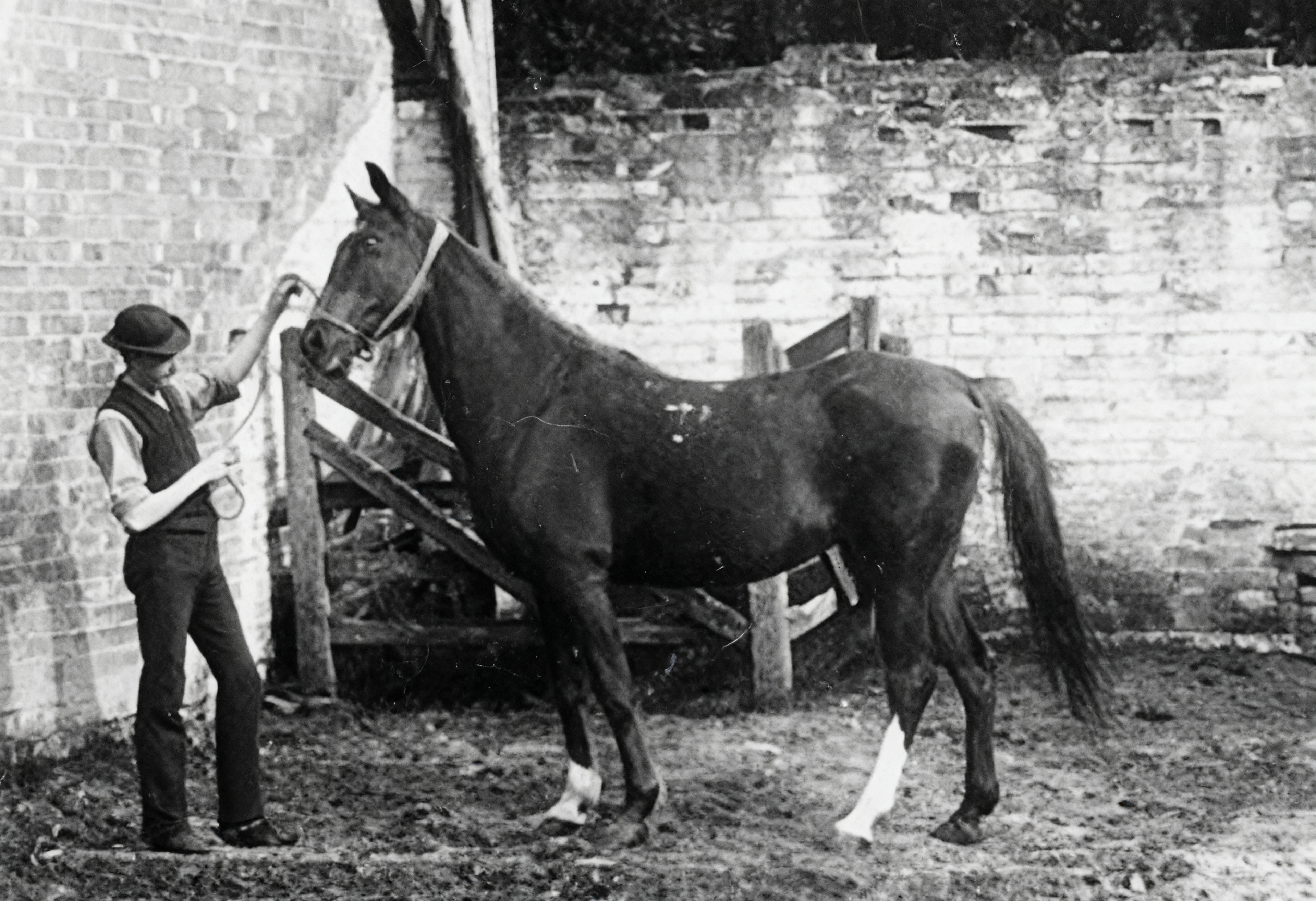
Burning Bush
Foaled around 1869, Burning Bush (originally named Zenobia) was a desert-bred mare of the Koheylah Krushiyah strain, sired by a stallion of the Koheilan Abu Janub line. Described as a dark chestnut, she was purchased at Hama by Mr. Skene and subsequently became one of the first six horses to arrive at Crabbet Park on 2 July 1878. Lady Anne Blunt recorded the anticipation of their arrival in her diary, capturing a moment that would later be recognized as pivotal in the development of Arabian breeding in Britain.
Despite her promising origins, Burning Bush failed to meet expectations as a broodmare. Over the course of her years at Crabbet, she produced only a single foal—a bay filly by the stallion Kars—which died within a few days. Thereafter, she was considered barren.
On surviving photographs, Burning Bush appears lightly built, somewhat narrow through the body, and lacking the refinement and structural strength that would later characterize successful Crabbet lines. Her conformation suggests a mare of moderate quality rather than outstanding type, with a longer back, modest hindquarters, and an overall impression of slightness. In 1879, only a year after her arrival, Burning Bush went blind. Nevertheless, she was not discarded. In 1884, she was given to Miss Dillon, who cared for her for several years thereafter. Even in her later life, she produced no additional offspring.
She died in or after 1888.
The story of Burning Bush is, in many respects, one of absence—of unrealized genetic contribution and quiet obscurity. Yet her presence within the foundational group of Crabbet imports is historically important. As one of the original six, she shared in a moment that would profoundly influence Arabian horse breeding in Europe and beyond.
In the broader narrative of the Arabian horse, which often emphasizes celebrated sires and influential mares, Burning Bush offers a different perspective. She represents those animals whose impact is not measured in progeny, but in their participation in formative historical events. Her story, though modest, contributes to a fuller and more nuanced understanding of the early years of Crabbet Park and the realities of nineteenth-century horse breeding.
Despite her promising origins, Burning Bush failed to meet expectations as a broodmare. Over the course of her years at Crabbet, she produced only a single foal—a bay filly by the stallion Kars—which died within a few days. Thereafter, she was considered barren.
On surviving photographs, Burning Bush appears lightly built, somewhat narrow through the body, and lacking the refinement and structural strength that would later characterize successful Crabbet lines. Her conformation suggests a mare of moderate quality rather than outstanding type, with a longer back, modest hindquarters, and an overall impression of slightness. In 1879, only a year after her arrival, Burning Bush went blind. Nevertheless, she was not discarded. In 1884, she was given to Miss Dillon, who cared for her for several years thereafter. Even in her later life, she produced no additional offspring.
She died in or after 1888.
The story of Burning Bush is, in many respects, one of absence—of unrealized genetic contribution and quiet obscurity. Yet her presence within the foundational group of Crabbet imports is historically important. As one of the original six, she shared in a moment that would profoundly influence Arabian horse breeding in Europe and beyond.
In the broader narrative of the Arabian horse, which often emphasizes celebrated sires and influential mares, Burning Bush offers a different perspective. She represents those animals whose impact is not measured in progeny, but in their participation in formative historical events. Her story, though modest, contributes to a fuller and more nuanced understanding of the early years of Crabbet Park and the realities of nineteenth-century horse breeding.