Burkan 1964
March 8, 2026, Photo archive
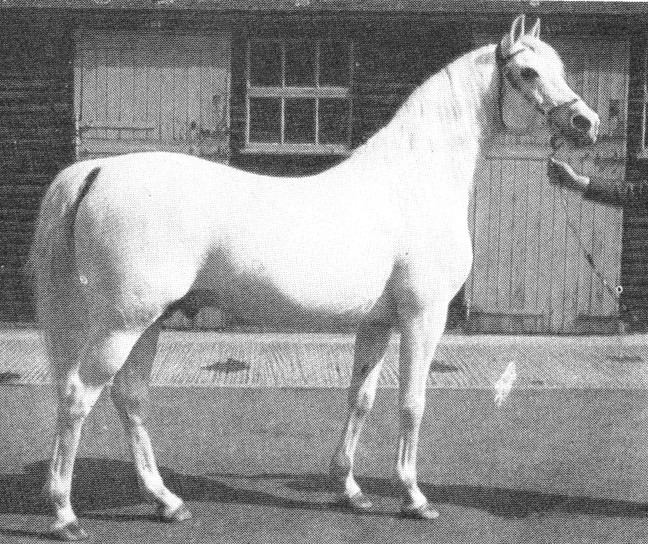
Burkan 1964
For more than a century, the story of the Arabian horse in Europe has been one of dialogue between nations. Few relationships were as influential — or as enduring — as that between Crabbet Park Stud in England and the great Polish private and State Studs. Horses traveled in both directions, bloodlines intertwined, and each country strengthened the other’s breeding vision. The most famous symbol of that exchange remains Skowronek, bred in Poland, sold to Crabbet, and later returning immense influence to his homeland through his descendants.
In 1975, that long genetic exchange reached its final chapter when Burkan was leased to Poland — one of the last direct infusions of Crabbet blood into the Polish State Studs.
Burkan was foaled in 1964 in England, bred by Lord Moyne at Biddesden Stud.
His dam, Biruta, was bred at Nowy Dwór in Poland, a program known for preserving strong classical mare families. She belonged to the distinguished Koheylah Moradiyah strain of Sahara (desert bred), one of the most respected female lines in Polish breeding. Biruta founded one of the most successful show horse families in Europe: Belgiums aristocrate mare Saskia RJ (European and World Champion Filly), Libanon Esplashal (World Reserve Champion Mare), Bess-Faizah (Senior World Gold Champion Mare), the chestnut sabino stallion Aurabba (sire of World Champion Colt Aukubra) and the famous modern multi halter show champions and sires of champions Excalibur EA and Shanghai EA, all trace to Biruta in direct line.
Exported to Great Britain, Biruta was by Trypolis, a sire whose daughters left a lasting mark on modern pedigrees. Through Trypolis, she was a half-sister to the exquisite flea-bitten grey mare Carmen, dam of the outstanding Polish sire Comet. Comet became one of the pivotal post-war stallions in Poland, admired for his dryness, elegance, and prepotency
Her dam, Bika (Wielki Szlem x Panika by Miezcnik), who was later exported to the United States, herself proved an influential producer. Among her offspring was the striking flea-bitten grey stallion Bilbao, foaled in 1960 and sired by Comet — reinforcing the Carmen–Comet branch within the family. Bilbao later sired the 1980 Swedish National Champion Mare Cayenne (out of Menuette).
On the sire’s side of Burkan stood Saladin II, pure Crabbet. Saladin II was by Naziri and out of Starilla, herself by Raseem.
Importantly, those same Crabbet lines had heavily influenced early Russian Arabian breeding. Through Naziri and Raseem, Saladin II was closely related to many Russian Arabians that later shaped Polish programs.
In England, Burkan sired the grey stallion White Lightning, foaled in 1967. Through White Lightning, Burkan’s influence reached the global show arena. White Lightning became the sire of Carmargue, the 1985 World Champion Stallion.
In 1975, Burkan was leased to Poland in exchange for the Polish stallion Banat. He stood in Poland from 1975 to 1977. His tenure was brief — but his influence endured. Contrary to his contribution of White Lightning, Burkan left no lasting sire line in Poland. Instead, his importance emerged through his daughters.
Among them were Elegancja and Estrada, both retained within Polish breeding. Elegancja’s branch of the family would later contribute to the pedigree of Ekstern, one of the most influential modern Polish sires and a former chief sire at Michalów Stud. Ekstern’s show-ring success and prepotency brought international recognition to Polish breeding in the late 20th and early 21st centuries.
Another daughter, Pilawa (x Platyna), was exported to Sweden, continuing the family’s European reach.
Burkan was not a revolutionary stallion. He did not impose a radical new type. Instead, he reinforced.
His pedigree allowed him to integrate seamlessly into Polish breeding, strengthening mare families without disrupting identity. Through daughters like Elegancja and through his grandson Carmargue, his influence entered both maternal and paternal streams of modern Arabian pedigrees.
In 1975, that long genetic exchange reached its final chapter when Burkan was leased to Poland — one of the last direct infusions of Crabbet blood into the Polish State Studs.
Burkan was foaled in 1964 in England, bred by Lord Moyne at Biddesden Stud.
His dam, Biruta, was bred at Nowy Dwór in Poland, a program known for preserving strong classical mare families. She belonged to the distinguished Koheylah Moradiyah strain of Sahara (desert bred), one of the most respected female lines in Polish breeding. Biruta founded one of the most successful show horse families in Europe: Belgiums aristocrate mare Saskia RJ (European and World Champion Filly), Libanon Esplashal (World Reserve Champion Mare), Bess-Faizah (Senior World Gold Champion Mare), the chestnut sabino stallion Aurabba (sire of World Champion Colt Aukubra) and the famous modern multi halter show champions and sires of champions Excalibur EA and Shanghai EA, all trace to Biruta in direct line.
Exported to Great Britain, Biruta was by Trypolis, a sire whose daughters left a lasting mark on modern pedigrees. Through Trypolis, she was a half-sister to the exquisite flea-bitten grey mare Carmen, dam of the outstanding Polish sire Comet. Comet became one of the pivotal post-war stallions in Poland, admired for his dryness, elegance, and prepotency
Her dam, Bika (Wielki Szlem x Panika by Miezcnik), who was later exported to the United States, herself proved an influential producer. Among her offspring was the striking flea-bitten grey stallion Bilbao, foaled in 1960 and sired by Comet — reinforcing the Carmen–Comet branch within the family. Bilbao later sired the 1980 Swedish National Champion Mare Cayenne (out of Menuette).
On the sire’s side of Burkan stood Saladin II, pure Crabbet. Saladin II was by Naziri and out of Starilla, herself by Raseem.
Importantly, those same Crabbet lines had heavily influenced early Russian Arabian breeding. Through Naziri and Raseem, Saladin II was closely related to many Russian Arabians that later shaped Polish programs.
In England, Burkan sired the grey stallion White Lightning, foaled in 1967. Through White Lightning, Burkan’s influence reached the global show arena. White Lightning became the sire of Carmargue, the 1985 World Champion Stallion.
In 1975, Burkan was leased to Poland in exchange for the Polish stallion Banat. He stood in Poland from 1975 to 1977. His tenure was brief — but his influence endured. Contrary to his contribution of White Lightning, Burkan left no lasting sire line in Poland. Instead, his importance emerged through his daughters.
Among them were Elegancja and Estrada, both retained within Polish breeding. Elegancja’s branch of the family would later contribute to the pedigree of Ekstern, one of the most influential modern Polish sires and a former chief sire at Michalów Stud. Ekstern’s show-ring success and prepotency brought international recognition to Polish breeding in the late 20th and early 21st centuries.
Another daughter, Pilawa (x Platyna), was exported to Sweden, continuing the family’s European reach.
Burkan was not a revolutionary stallion. He did not impose a radical new type. Instead, he reinforced.
His pedigree allowed him to integrate seamlessly into Polish breeding, strengthening mare families without disrupting identity. Through daughters like Elegancja and through his grandson Carmargue, his influence entered both maternal and paternal streams of modern Arabian pedigrees.