Jaga II
March 6, 2026, Photo archive
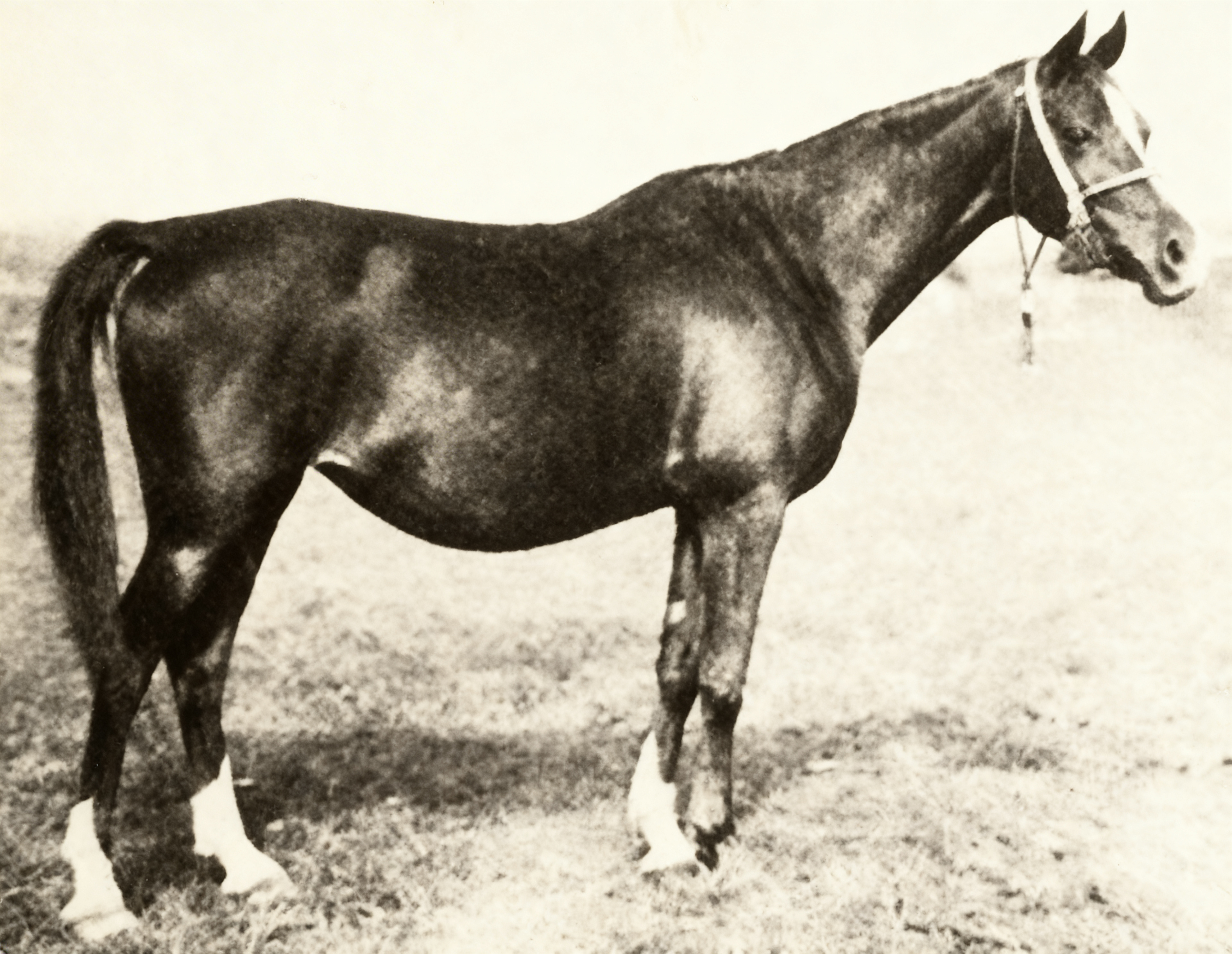
Jaga II
In 1919, the Radautz-bred mare Siglavy Bagdady arrived at the newly reestablished Polish state stud at Janow Podlaski Stud Farm. Bred at Radautz (then in Hungary, now Romania), she became one of the important foundation mares of the interwar Polish program. Among her most influential produce was the stallion Fetysz, by Bakszysz, later recognized as an excellent sire of both Arabians and Trakehners.
Siglavy Bagdady also produced the mare Bajka (1920–1942), by Amurath III. Bajka was therefore a half-sister to Fetysz, sharing the same distinguished dam. At Janów, Bajka herself became an important broodmare, producing eight registered purebred foals between 1928 and 1938, and one additional foal at Tersk Stud after her wartime deportation. Among her offspring, none would prove more historically significant than the 1928 chestnut filly Jaga II.
Her sire was the grey stallion Koheilan I, foaled in 1922 at Babolna Stud in Hungary. A son of Koheilan IV and tracing in the male line to the desert-bred Koheilan Adjuze, Koheilan I carried the Kuhaylat al-Sharif strain through his dam, 10 Gazal. Imported to Janów in 1924, he rose to become the stud’s chief sire and left a profound mark on Polish Arabian breeding.
Among his most influential offspring was the stallion Lowelas, important in both Arabian and Trakehner breeding. His daughter Karmen II became ancestress of Karramba, a mare instrumental in the Polish Arabian boom in Great Britain. Another daughter, Jaskolka II, produced Wilga, whose daughters Carmen and Arwila became pillars of modern Polish families.
Equally significant was Koheilan I’s daughter Kasztelanka, later imported to the United States by Henry Babson. Bred to the Straight Egyptian stallion Fadl, she produced the stallion Fadheilan. Through Fadheilan came the celebrated American sire Fadjur, often described as “fabulous” for his prepotency and show-ring impact. Fadjur would in turn become the maternal grandsire of the legendary stallion Khemosabi.
Between 1934 and 1938, Jaga II produced four recorded foals: Pan Twardowski and Rybalt (both by Hardy), the mare Saga (1936, by Hardy), and the colt Wyrwidab, later known as Wind (1938, by Ofir). While all contributed to the stud’s history, Saga and Wind ensured their dam’s enduring legacy.
Wind, by the celebrated Ofir — sire also of Witraz, Wielki Szlem, and Witez II — carried forward one of Poland’s most dynamic sire lines. After the Second World War, Wind stood at the German State Stud of Marbach beginning in 1948. There he sired a select number of foals. His daughter Winarsad (out of Dinarsad) continued his presence in Marbach’s broodmare band. Among his produce at Marbach were also the daughters Winette (1951, out of Jeanette) and Wilja (1950, out of Isabella), both of whom later entered private breeding programs and contributed as broodmares. Wilja’s full brother, Wesir (1951), emerged as Wind’s most notable son.
If Wind extended her legacy westward, Jaga II’s daughter Saga secured it firmly in Poland. Saga became the dam of Estokada (1951, by Amurath Sahib), founder of the modern Polish E-line. Estokada’s exceptional quality, balance, and athleticism defined a dynasty whose descendants achieved international distinction. Estokada's importance rests not only in her own quality, but in the remarkable consistency of her produce. Among her earliest distinguished offspring was Esterka (by Anarchista), who continued the family’s strength as a broodmare. By the great Comet, Estokada produced Eter, an important stallion, and the treasured mare Estonia, who further consolidated the family’s influence within Poland.
Particularly transformative were Estokada’s daughters by the Polish stallion Naborr (later exported to the United States). From this cross came Estebna, later European Champion Mare; Edycja, who achieved distinction as a Canadian English Pleasure Champion; and Eskapada, a Polish National Reserve Champion who was the dam of Erros (by El Paso), US National Reserve Champ Stallion.
Through Estokada and her celebrated progeny, Saga — and behind her, Jaga II — became ancestress to a family often described as Arabian royalty.
Siglavy Bagdady also produced the mare Bajka (1920–1942), by Amurath III. Bajka was therefore a half-sister to Fetysz, sharing the same distinguished dam. At Janów, Bajka herself became an important broodmare, producing eight registered purebred foals between 1928 and 1938, and one additional foal at Tersk Stud after her wartime deportation. Among her offspring, none would prove more historically significant than the 1928 chestnut filly Jaga II.
Her sire was the grey stallion Koheilan I, foaled in 1922 at Babolna Stud in Hungary. A son of Koheilan IV and tracing in the male line to the desert-bred Koheilan Adjuze, Koheilan I carried the Kuhaylat al-Sharif strain through his dam, 10 Gazal. Imported to Janów in 1924, he rose to become the stud’s chief sire and left a profound mark on Polish Arabian breeding.
Among his most influential offspring was the stallion Lowelas, important in both Arabian and Trakehner breeding. His daughter Karmen II became ancestress of Karramba, a mare instrumental in the Polish Arabian boom in Great Britain. Another daughter, Jaskolka II, produced Wilga, whose daughters Carmen and Arwila became pillars of modern Polish families.
Equally significant was Koheilan I’s daughter Kasztelanka, later imported to the United States by Henry Babson. Bred to the Straight Egyptian stallion Fadl, she produced the stallion Fadheilan. Through Fadheilan came the celebrated American sire Fadjur, often described as “fabulous” for his prepotency and show-ring impact. Fadjur would in turn become the maternal grandsire of the legendary stallion Khemosabi.
Between 1934 and 1938, Jaga II produced four recorded foals: Pan Twardowski and Rybalt (both by Hardy), the mare Saga (1936, by Hardy), and the colt Wyrwidab, later known as Wind (1938, by Ofir). While all contributed to the stud’s history, Saga and Wind ensured their dam’s enduring legacy.
Wind, by the celebrated Ofir — sire also of Witraz, Wielki Szlem, and Witez II — carried forward one of Poland’s most dynamic sire lines. After the Second World War, Wind stood at the German State Stud of Marbach beginning in 1948. There he sired a select number of foals. His daughter Winarsad (out of Dinarsad) continued his presence in Marbach’s broodmare band. Among his produce at Marbach were also the daughters Winette (1951, out of Jeanette) and Wilja (1950, out of Isabella), both of whom later entered private breeding programs and contributed as broodmares. Wilja’s full brother, Wesir (1951), emerged as Wind’s most notable son.
If Wind extended her legacy westward, Jaga II’s daughter Saga secured it firmly in Poland. Saga became the dam of Estokada (1951, by Amurath Sahib), founder of the modern Polish E-line. Estokada’s exceptional quality, balance, and athleticism defined a dynasty whose descendants achieved international distinction. Estokada's importance rests not only in her own quality, but in the remarkable consistency of her produce. Among her earliest distinguished offspring was Esterka (by Anarchista), who continued the family’s strength as a broodmare. By the great Comet, Estokada produced Eter, an important stallion, and the treasured mare Estonia, who further consolidated the family’s influence within Poland.
Particularly transformative were Estokada’s daughters by the Polish stallion Naborr (later exported to the United States). From this cross came Estebna, later European Champion Mare; Edycja, who achieved distinction as a Canadian English Pleasure Champion; and Eskapada, a Polish National Reserve Champion who was the dam of Erros (by El Paso), US National Reserve Champ Stallion.
Through Estokada and her celebrated progeny, Saga — and behind her, Jaga II — became ancestress to a family often described as Arabian royalty.