Dziwa 1922
January 10, 2026, Photo archive
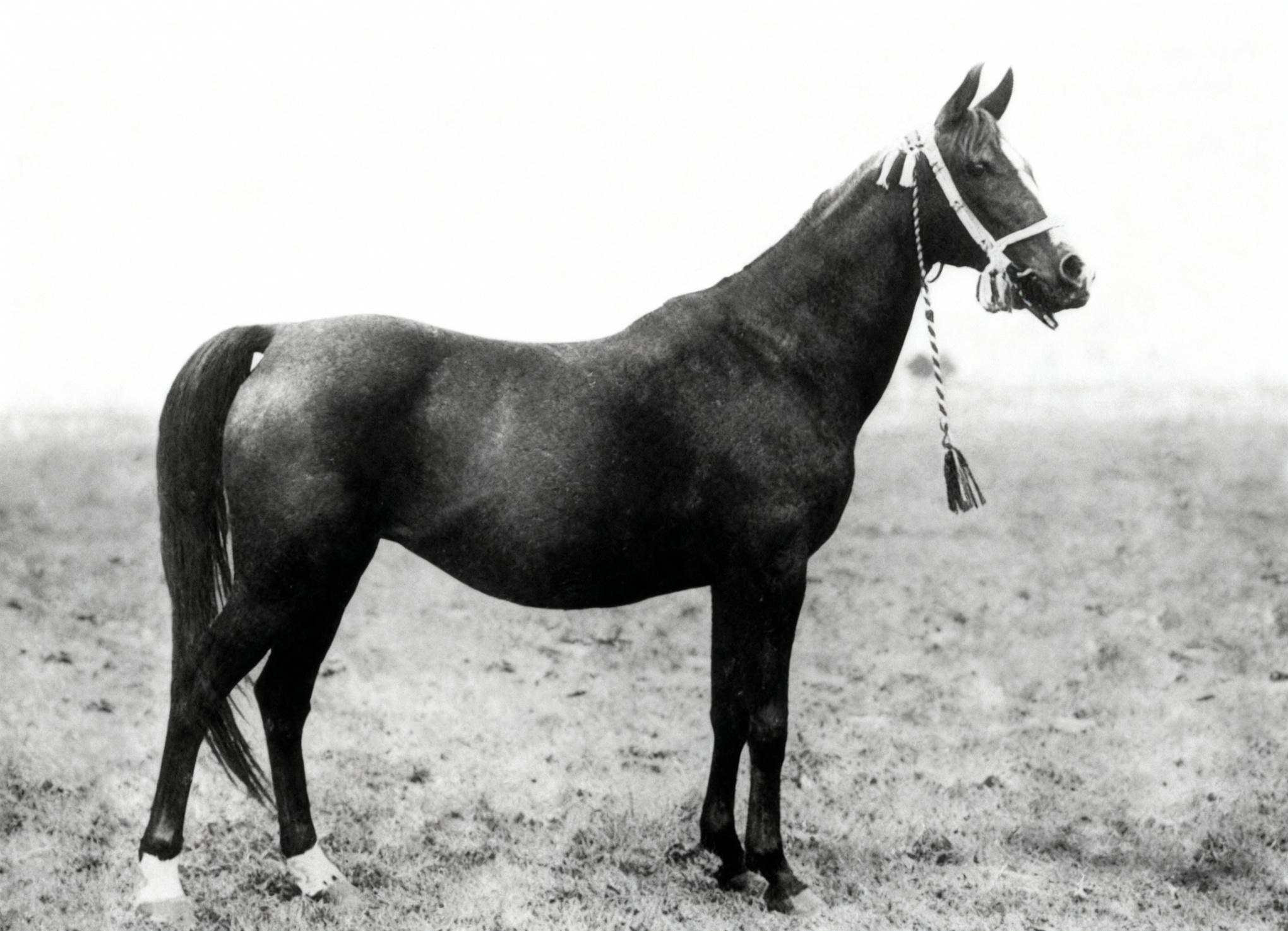
Dziwa 1922
The story of Dziwa begins not with her own birth, but with her dam Zulejma. Foaled in 1914 at the Jezupol Stud of the Dzieduszycki family, Zulejma was a daughter by the imported desert-bred stallion Kohejlan, also the sire of Gazella II and Mlecha, and out of Pomponia, herself the producer of three daughters. Of these, Zulejma, the eldest, would become the cornerstone of a family whose influence extended through Janów Podlaski and far beyond.
Zulejma was among the small group of Polish Arabians to survive the devastation of the First World War. Transferred to Janów Podlaski as a six-year-old, she founded four distinct branches of her family through her daughters Dziwa, Ferja, Lassa and Huryska (grand-dam of Epizoda). Through them, Zulejma preserved some of the last asil elements of old Polish breeding, rooted in the Kuhaylah Mimriyah strain and descending in the female line from the desert-bred mare Sahara, imported from Arabia by Count Jerzy Dzieduszycki.
Zulejma's daughter Dziwa, a chestnut mare foaled in 1922, was bred and owned by the State Stud Janów Podlaski at a time when the stud was rebuilding its Arabian herd with exceptional care and selectivity.
Dziwa's sire, the grey stallion Abu Mlech (1902–1930), added a distinctive layer to her pedigree. Bred at Jezupol and also known as Winniciousz, Abu Mlech had been licensed for Trakehner breeding before being transferred to Janów in 1921. Though he sired only six purebred Arabian foals at Janów—three stallions and three mares—his influence was disproportionate to his numbers. Among these offspring, his son Enwer Bey and his daughter Dziwa stand out as his most important representatives.
Over her lifetime she produced eleven purebred Arabian foals, including the stallions Ofir and Taki Pan and the mares Mokka, Limba or Niwka, among others. Her daughter Niwka was exported in 1937 to the United States by J. M. Dickinson for his Travelers Rest Arabian Stud in Franklin, Tennessee, while Limba became the dam of Kanitel, herself an outstanding broodmare.
Yet it is through Ofir that Dziwa’s name became inseparable from the global history of the Arabian horse. Ofir sired the celebrated brothers Witraz, Witez II, Wielki Szlem, and Wind (Wyrwidab), along with a powerful group of daughters whose descendants shaped breeding programs in Poland, Russia, Europe, and the United States. Through Ofir’s daughter Odaliska, bred at Tersk, Dziwa’s influence flowed into the full brothers Salon and Suvenir, whose impact permanently altered modern Arabian breeding. Another of Ofir's daughters that should not to be forgotten here is Mammona, often referred to as the Queen of Tersk. Mammona's descendants played a decisive role in defining the modern Russian Arabian. Through these mares and their progeny, Dziwa’s legacy became firmly embedded in the very foundation of twentieth-century Russian Arabian breeding.
In 1939, Dziwa was deported to Russia during the Second World War. She died there in 1940. Her life ended far from Janów Podlaski, but Dziwa’s true legacy endures in her role as the dam of Ofir, through whom her influence spread across Poland, Russia, and the wider Arabian world.
Zulejma was among the small group of Polish Arabians to survive the devastation of the First World War. Transferred to Janów Podlaski as a six-year-old, she founded four distinct branches of her family through her daughters Dziwa, Ferja, Lassa and Huryska (grand-dam of Epizoda). Through them, Zulejma preserved some of the last asil elements of old Polish breeding, rooted in the Kuhaylah Mimriyah strain and descending in the female line from the desert-bred mare Sahara, imported from Arabia by Count Jerzy Dzieduszycki.
Zulejma's daughter Dziwa, a chestnut mare foaled in 1922, was bred and owned by the State Stud Janów Podlaski at a time when the stud was rebuilding its Arabian herd with exceptional care and selectivity.
Dziwa's sire, the grey stallion Abu Mlech (1902–1930), added a distinctive layer to her pedigree. Bred at Jezupol and also known as Winniciousz, Abu Mlech had been licensed for Trakehner breeding before being transferred to Janów in 1921. Though he sired only six purebred Arabian foals at Janów—three stallions and three mares—his influence was disproportionate to his numbers. Among these offspring, his son Enwer Bey and his daughter Dziwa stand out as his most important representatives.
Over her lifetime she produced eleven purebred Arabian foals, including the stallions Ofir and Taki Pan and the mares Mokka, Limba or Niwka, among others. Her daughter Niwka was exported in 1937 to the United States by J. M. Dickinson for his Travelers Rest Arabian Stud in Franklin, Tennessee, while Limba became the dam of Kanitel, herself an outstanding broodmare.
Yet it is through Ofir that Dziwa’s name became inseparable from the global history of the Arabian horse. Ofir sired the celebrated brothers Witraz, Witez II, Wielki Szlem, and Wind (Wyrwidab), along with a powerful group of daughters whose descendants shaped breeding programs in Poland, Russia, Europe, and the United States. Through Ofir’s daughter Odaliska, bred at Tersk, Dziwa’s influence flowed into the full brothers Salon and Suvenir, whose impact permanently altered modern Arabian breeding. Another of Ofir's daughters that should not to be forgotten here is Mammona, often referred to as the Queen of Tersk. Mammona's descendants played a decisive role in defining the modern Russian Arabian. Through these mares and their progeny, Dziwa’s legacy became firmly embedded in the very foundation of twentieth-century Russian Arabian breeding.
In 1939, Dziwa was deported to Russia during the Second World War. She died there in 1940. Her life ended far from Janów Podlaski, but Dziwa’s true legacy endures in her role as the dam of Ofir, through whom her influence spread across Poland, Russia, and the wider Arabian world.