Kasztelanka
January 26, 2026, Photo archive
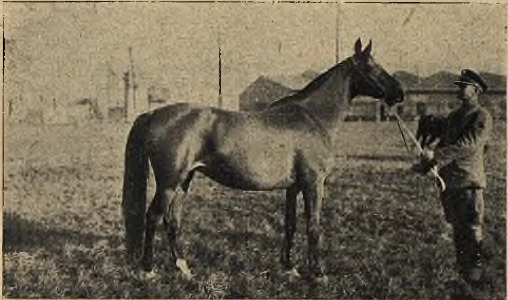
Kasztelanka
The bay Polish-bred mare Kasztelanka was sired by Koheilan I, a grey stallion foaled in 1922 at Bábolna Stud. A son of Koheilan IV, Koheilan I traced in the male line to the desert-bred stallion Koheilan Adjuze. His dam, 10 Gazal, was a grey Bábolna-bred mare of the Kuhaylat al-Sharif strain.
Sold to Janów Podlaski in 1924, Koheilan I became the stud’s chief sire and left a profound mark on Polish Arabian breeding. Among his most influential offspring was the stallion Lowelas, who would contribute significantly to both Trakehner and Arabian breeding programs. Koheilan I also sired Karmen II, whose daughter Karramba helped ignite the Polish Arabian boom in the United Kingdom. Another daughter, Jaskolka II, became the dam of Wilga, who in turn produced Carmen and Arwila, two broodmares of outstanding importance in Polish breeding.
In 1937, Koheilan I—by then renamed Koheilan VIII—was returned to Bábolna Stud. There he sired the mare Khema (out of 203 Ajeeb), who was later purchased by Gertraude Griesbach of Achental Stud in Germany, where she became a foundation mare of the program.
Kasztelanka’s dam was Bialogrodka, bred by Prince Roman Sanguszko at Gumniska Stud. Bialogrodka was sired by Orjent, himself a son of the desert-bred stallion Antar, and out of Republika. Her dam, Pojata, was by Muzafer-Pasha, whose sire Rymnik became the grandsire of the legendary Skowronek through his daughter Jaskolka.
Born at Janów Podlaski, Kasztelanka entered the stud’s broodmare band, where she produced three registered foals: a stallion and a mare by Hardy, and a bay stallion by Enwer Bey bearing the famously difficult Polish name Towarzysz Pancerny—a term translating roughly to “Iron Comrade.” During the turmoil of World War II, this stallion made his way to Germany, reportedly ridden by a corporal. There, he was eventually acquired by Gertraude Griesbach for her Achental Stud, where she renamed him Halef.
In 1938, Henry B. Babson traveled to Poland in search of Arabian horses for his American breeding program. Among the mares he selected were Azja IV, the Oaks winner Kostrzewa, and Kasztelanka. While Kasztelanka’s racing career was modest compared to that of her accomplished half-sister Kostrzewa, her true significance would emerge in the breeding shed.
After producing Warsaw by Ofir, Kasztelanka was bred in 1942 to Babson’s chief sire, the Straight Egyptian stallion Fadl (1930–1963). The following year she foaled a colt named Fadheilan, who would go on to influence American Arabian breeding through one of his sons: Fadjur (out of Bint Sahara).
Known as “The Fabulous Fadjur,” the bay stallion, foaled in 1952, became renowned for his charisma, correct conformation, and athletic ability. Standing at Jack Tone Ranch, Fadjur sired more than 700 foals, many of which excelled in both halter and performance disciplines, cementing his status as a cornerstone of the Arabian breed in the United States.
After a brief stay at Traveler’s Rest Farm, where she was sold in 1946, Kasztelanka spent her final years in Cuba, to which she was exported three years later.
Sold to Janów Podlaski in 1924, Koheilan I became the stud’s chief sire and left a profound mark on Polish Arabian breeding. Among his most influential offspring was the stallion Lowelas, who would contribute significantly to both Trakehner and Arabian breeding programs. Koheilan I also sired Karmen II, whose daughter Karramba helped ignite the Polish Arabian boom in the United Kingdom. Another daughter, Jaskolka II, became the dam of Wilga, who in turn produced Carmen and Arwila, two broodmares of outstanding importance in Polish breeding.
In 1937, Koheilan I—by then renamed Koheilan VIII—was returned to Bábolna Stud. There he sired the mare Khema (out of 203 Ajeeb), who was later purchased by Gertraude Griesbach of Achental Stud in Germany, where she became a foundation mare of the program.
Kasztelanka’s dam was Bialogrodka, bred by Prince Roman Sanguszko at Gumniska Stud. Bialogrodka was sired by Orjent, himself a son of the desert-bred stallion Antar, and out of Republika. Her dam, Pojata, was by Muzafer-Pasha, whose sire Rymnik became the grandsire of the legendary Skowronek through his daughter Jaskolka.
Born at Janów Podlaski, Kasztelanka entered the stud’s broodmare band, where she produced three registered foals: a stallion and a mare by Hardy, and a bay stallion by Enwer Bey bearing the famously difficult Polish name Towarzysz Pancerny—a term translating roughly to “Iron Comrade.” During the turmoil of World War II, this stallion made his way to Germany, reportedly ridden by a corporal. There, he was eventually acquired by Gertraude Griesbach for her Achental Stud, where she renamed him Halef.
In 1938, Henry B. Babson traveled to Poland in search of Arabian horses for his American breeding program. Among the mares he selected were Azja IV, the Oaks winner Kostrzewa, and Kasztelanka. While Kasztelanka’s racing career was modest compared to that of her accomplished half-sister Kostrzewa, her true significance would emerge in the breeding shed.
After producing Warsaw by Ofir, Kasztelanka was bred in 1942 to Babson’s chief sire, the Straight Egyptian stallion Fadl (1930–1963). The following year she foaled a colt named Fadheilan, who would go on to influence American Arabian breeding through one of his sons: Fadjur (out of Bint Sahara).
Known as “The Fabulous Fadjur,” the bay stallion, foaled in 1952, became renowned for his charisma, correct conformation, and athletic ability. Standing at Jack Tone Ranch, Fadjur sired more than 700 foals, many of which excelled in both halter and performance disciplines, cementing his status as a cornerstone of the Arabian breed in the United States.
After a brief stay at Traveler’s Rest Farm, where she was sold in 1946, Kasztelanka spent her final years in Cuba, to which she was exported three years later.